Visiting Cathedral of Pisa: your complete guide
The Cathedral of Pisa is the marble heart of Piazza dei Miracoli, best known for its richly decorated Romanesque interior and its relationship to the Leaning Tower beside it. Even though the square looks compact, visits can feel crowded and slightly rushed because Tower entry is timed and most day-trippers arrive in the same late-morning window. The difference between a smooth visit and a frustrating one is timing your Cathedral stop around your Tower slot. This guide covers when to go, how long to stay, tickets, and the route that works best.
Quick overview: Cathedral of Pisa at a glance
If you want to see more than the famous exterior and avoid the busiest crush in the square, plan this stop a little more carefully than most visitors do.
- When to visit: Daily, with longer hours in spring and summer and shorter winter hours. 9am–10:30am is noticeably calmer than 11am–2pm, because that is when Florence day-trippers and coach groups tend to hit Piazza dei Miracoli at once.
- Getting in: From €20 for timed Tower entry with Cathedral access included. Guided tours start around €30. Advance booking matters most from April–October, when preferred Tower slots are often the first thing to disappear.
- How long to allow: 1.5–2.5 hours works for most visitors. It stretches longer if you add the Baptistery, Camposanto, and the museums instead of doing only the Cathedral and Tower.
- What most people miss: Giovanni Pisano’s pulpit, the apse mosaic, and the quieter walk through the Camposanto are the details that make the visit feel richer than a quick photo stop.
- Is a guide worth it? Yes, if you want the Cathedral’s symbolism and Galileo stories explained properly; if you mostly want to move at your own pace, a good audio guide does the job for less.
🎟️ Tower slots for Cathedral of Pisa visits sell out days and sometimes weeks in advance during spring, summer, and holiday weekends. Lock in your visit before the time you want is gone. See ticket options
Jump to what you need
🕒 Where and when to go
🎟️ Which ticket is right for you?
🗺️ Getting around
⛪ What to see
♿ Facilities and accessibility
Where and when to go
How do you get to the Cathedral of Pisa?
The Cathedral sits inside Piazza dei Miracoli on Pisa’s northwestern side, about 1.5km (0.9 miles) from Pisa Centrale and closer to Pisa S. Rossore for a shorter walk.
Piazza del Duomo, 56126 Pisa PI, Italy
- Train: Pisa S. Rossore station → 10-minute walk → the easiest rail arrival if you want the shortest approach to the square OR Pisa Centrale station → 20-minute walk → better if you also want to pass through the historic center on the way.
- Bus: Local buses to the Piazza dei Miracoli area → 3–8-minute walk → useful if you are arriving from Pisa Centrale with limited time.
- Taxi / rideshare: Drop-off near Piazza Manin → 3-minute walk → the simplest option if you are arriving with luggage or a tight Tower slot.
Which entrance should you use?
The Cathedral itself is straightforward once you are in the square, but visitors most often get caught out by focusing on the wrong line instead of their timed monument slot.
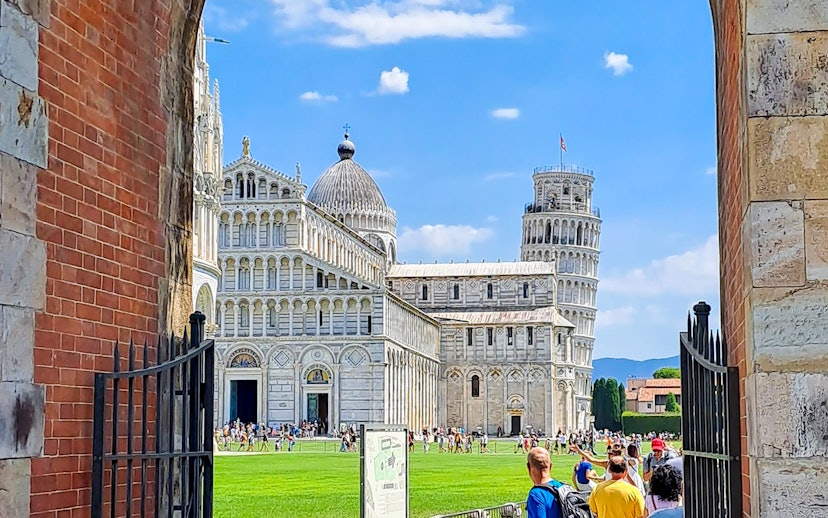
- Main Cathedral entrance: Located on Piazza del Duomo at the cathedral façade. Best for all valid Cathedral or complex-ticket holders. Expect 10–20 minutes wait during late mornings from April–October.
When is Cathedral of Pisa open?
- Daily: Hours vary slightly by monument and season, with the longest opening windows from spring through early fall.
- Peak season: Morning to early evening access is typical across the square’s main monuments.
- Lower season: Opening windows are shorter, especially from November–February.
- Last entry: Timed Tower access is strict, and monument entry usually closes before the posted end of the day.
When is it busiest? Late mornings, especially 11am–2pm, plus weekends from April–October, are the hardest time to move around the square because group tours and same-day visitors overlap.
When should you actually go? Go as close to opening as you can, or in the last 90 minutes of the day, when the Cathedral interior feels calmer and the queue pressure around the Tower eases.
Which Cathedral of Pisa ticket is best for you
| Ticket type | What's included | Best for | Price range |
|---|---|---|---|
Pisa Monumental Complex: Leaning Tower, Cathedral, Museums & Baptistery Tickets | Timed Tower entry + Cathedral + Baptistery + Camposanto + Opera del Duomo Museum + Sinopie Museum | A first visit where you want the whole Piazza dei Miracoli covered in one booking instead of choosing monuments one by one. | €33 |
Pisa Leaning Tower and Cathedral Guided Tour | Guided Tower exterior explanation + timed Tower climb + guided Cathedral visit + expert guide + optional access to other square monuments | Exploring at your own pace when you still want context inside the Cathedral and across the square without joining a live group. | €57 |
Guided Tour of Field of Miracles with Leaning Tower Climb | 90-minute guided visit + local guide + Cathedral + Baptistery + Monumental Cemetery + timed Tower entry | A first visit where you want the stories, symbolism, and logistics handled before you climb. | €89 |
Pisa Cathedral and Baptistery Guided Tour | Guided tour + Cathedral ticket + Baptistery ticket + headsets for larger groups | Seeing the major monuments efficiently when you only have a half-day in Pisa and do not want to piece the route together yourself. | €42 |
Pisa Walking Tour with Cathedral & Leaning Tower Tickets | City walking tour + expert local guide + Cathedral entry + Leaning Tower admission | Spending your time inside the religious spaces rather than prioritizing the Tower climb. | €82 |
Connecting the Cathedral visit to the rest of Pisa instead of treating the square as a quick photo stop. |
How do you get around Cathedral of Pisa?
Getting around the complex
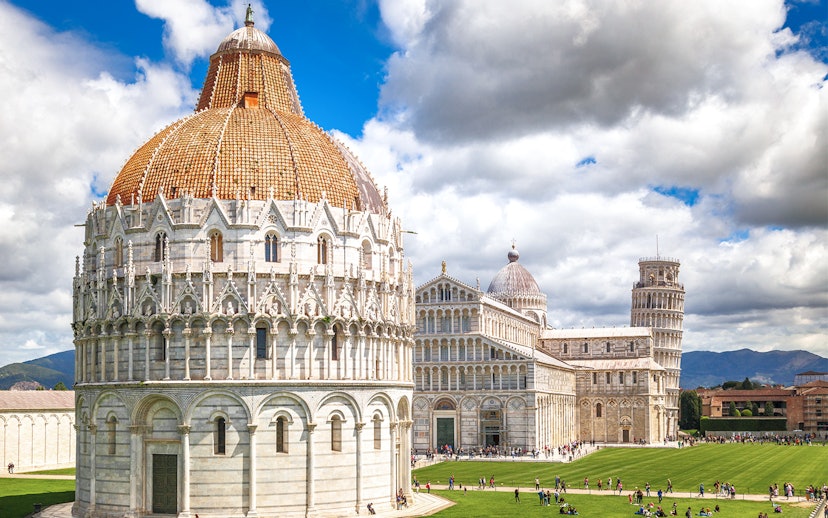
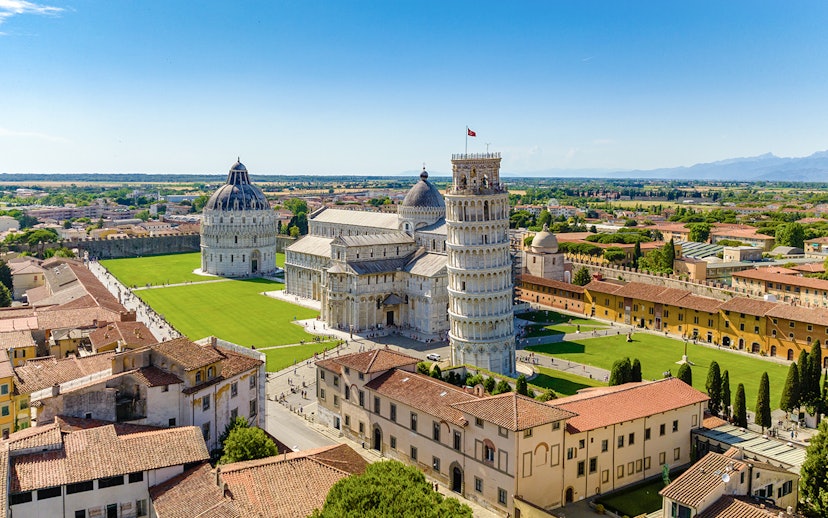
The Cathedral complex is best explored on foot, and most visitors can cover the key monuments in 1.5–3 hours depending on whether they climb the Tower and add the museums. The Cathedral is the visual anchor of the square, with the Baptistery in front of it and the Leaning Tower offset to one side.
- Cathedral nave: Main marble interior, pulpit, and ceiling → budget 20–30 minutes.
- Apse and pulpit zone: The artistic core of the Cathedral interior → budget 10–15 minutes if you slow down.
- Baptistery: Acoustics, font, and dome → budget 15–20 minutes.
- Leaning Tower: Timed climb and views from the top → budget 30 minutes for the climb slot itself.
- Camposanto: Cloisters, fresco fragments, and quieter atmosphere → budget 20–30 minutes.
Suggested route: Start with your timed Tower slot if you have one, then do the Cathedral immediately after while the stories and layout are fresh, and leave the Baptistery and Camposanto for the end when the square feels less frantic.
Maps and navigation tools
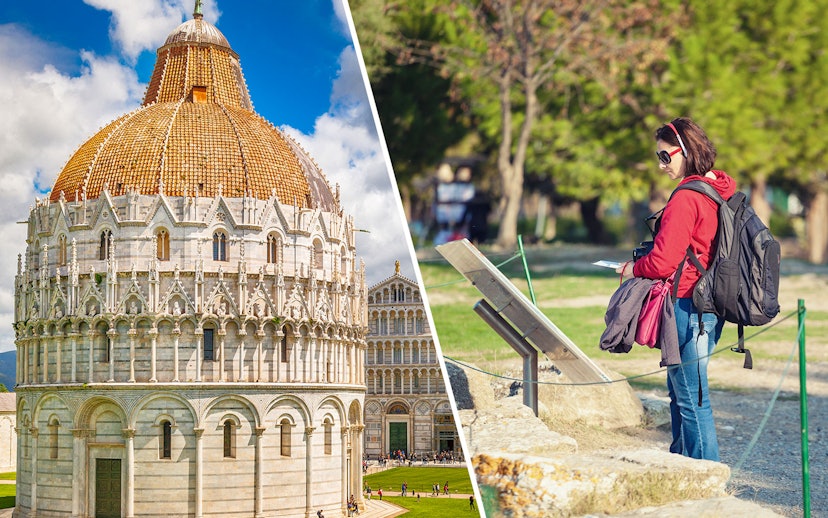
- Map: An on-site monument map or digital ticket overview works best → it covers the square’s six main stops → download or screenshot it before arrival.
- Signage: Wayfinding in the piazza is decent for the major monuments, but a saved map helps once you start adding the museums and the cemetery.
- Audio guide / app: Multilingual audio guide options are available in English, Italian, Spanish, German, French, and Portuguese → useful if you want context without a fixed tour time.
💡 Pro tip: Screenshot your ticket and monument map before you arrive — the square is simple to read, but timed Tower entry leaves little room for fumbling with email links at the gate.
What are the most significant spaces in Cathedral of Pisa?

Galileo’s Lamp
Attribute: Bronze chandelier legend
This is the hanging lamp long linked to Galileo’s observations about pendulum movement, and it is one of the Cathedral details many visitors glance at without realizing its significance. Even if the original scientific story is partly wrapped in legend, it still changes how you look at the space overhead. Most people forget to pause in the nave and look up before moving toward the altar.
Where to find it: Inside the main nave, suspended above the central space.
Giovanni Pisano’s pulpit
Attribute: Sculptor: Giovanni Pisano
This Gothic pulpit is one of the Cathedral’s greatest artistic treasures, carved with crowded biblical scenes that reward a slow walk around it. It is easy to rush because visitors often head straight toward the apse and the striped marble columns instead. Look closely at the emotional expressions and deep carving — that is where the drama is.
Where to find it: Inside the Cathedral, near the crossing area in front of the altar zone.
Apse mosaic of Christ in Majesty
Attribute: Era: 13th–14th century mosaic work
The apse mosaic pulls your eye forward with its gold shimmer, and it gives the Cathedral interior much of its sense of solemn scale. Visitors often admire it from a distance and move on too quickly, but it is worth staying still for a minute to see how the light changes the surface. The surviving work associated with Cimabue is the detail most people miss.
Where to find it: At the far end of the Cathedral, above the main altar in the apse.
The coffered ceiling
Attribute: Architectural feature: gilded ceiling
The ceiling is one of the reasons the Cathedral feels grander inside than many visitors expect from the exterior alone. It gives the nave warmth and depth, especially when afternoon light catches the gold detailing. Most people spend their whole visit looking straight ahead and never really take it in.
Where to find it: Throughout the central nave. Best seen from the middle of the church.
St. John’s Baptistery
Attribute: Type: Baptistery with celebrated acoustics
The Baptistery is not just a companion monument outside the Cathedral; it is one of the most memorable parts of the whole visit. Its acoustics demonstrations are what turn a quick look into a memorable stop, and the shift from Romanesque to Gothic architecture becomes more obvious the longer you stay. Many visitors enter, listen once, and leave without looking up into the dome.
Where to find it: Directly opposite the Cathedral across the lawn in Piazza dei Miracoli.
Camposanto Monumentale
Attribute: Type: Cloistered cemetery and fresco space
Camposanto gives the visit a quieter, more reflective rhythm after the Tower and Cathedral crowds. The fresco fragments and cloister walks add historical depth that a Tower-only visit never gives you. Visitors often skip it because it sits at the edge of the square and looks less dramatic from outside than it is within.
Where to find it: Along the northern edge of Piazza dei Miracoli, beside the Cathedral complex.
Facilities and accessibility
- 🎒 Cloakroom / lockers: Bags, luggage, and other restricted items for the Tower climb must be left at the cloakroom before entry and collected afterward.
- ⛪ Dress-code planning: Because the visit includes active religious spaces, you should arrive with shoulders and knees covered rather than expecting to solve it at the door.
- 🪑 Rest breaks: The square itself gives you open space to pause between monuments, which is useful if you are not doing the whole complex in one push.
- 🧾 Timed-entry control: Tower access runs on strict timed slots, so keep your ticket ready and do not count on flexibility if you arrive late.
- ♿ Mobility: The Cathedral interior is wheelchair accessible via ramps, but the Leaning Tower climb is not accessible because it involves 273 steep steps and no elevator.
- 👁️ Visual impairments: The most practical support for independent visitors is a multilingual audio guide, and guide dogs are permitted on the Cathedral and Baptistery guided tour.
- 🧠 Cognitive and sensory needs: The square can feel overstimulating late in the morning, so the lowest-stress window is close to opening or in the last part of the afternoon.
- 👨👩👧 Families and strollers: The piazza is mostly flat and manageable with a stroller, but the Tower climb is stairs-only and children under 8 years cannot enter.
This is a good family stop if your child is old enough for the Tower rules, because the visit mixes a famous landmark, open space, and short monument interiors rather than one long museum route.
- 🕐 Time: Plan 60–90 minutes with younger children if you are doing the Cathedral and exterior photos, or closer to 2 hours if older kids are climbing the Tower.
- 🏠 Facilities: The cloakroom is useful if you are carrying bulky bags, because you cannot take them into the Tower climb.
- 💡 Engagement: Let children listen for the Baptistery acoustics and then look for Galileo’s Lamp inside the Cathedral — those are the two details most likely to hold attention.
- 🎒 Logistics: Bring a light layer that meets the dress code, and book the earliest Tower slot you can if you are visiting with school-age children.
- 📍 After your visit: The Pisa city walls are a good follow-up if your family still has energy and wants one more view without another major indoor stop.
Rules and restrictions
What you need to know before you go
- Entry requirement: Tower access is timed, Cathedral entry is included with most monument tickets, and you should carry a valid ID for verification.
- Timed access: Arrive at least 15 minutes before your reserved Tower slot, because late arrivals are usually not accommodated.
Not allowed
- 🚫 Restricted items: Metal objects, bags, and containers are not permitted during the Tower climb.
- 🐾 Pets: Pets are not part of the standard monument visit, but guide dogs are permitted on the Cathedral and Baptistery guided tour.
- 🖐️ Unsafe behavior: The Tower climb is controlled and one-way, so stopping excessively or ignoring staff directions slows a narrow stair route used by everyone behind you.
Photography
Personal photography is part of the experience outdoors, especially around Piazza dei Miracoli, and most visitors spend time on classic Tower shots before going inside. Inside the religious spaces, keep your approach respectful and low-key, and do not expect bulky gear to move easily through security or on the Tower stairs. Flash, tripods, and anything that slows movement through narrow areas are the likeliest things to cause problems.
Dress code
Cathedral of Pisa enforces a dress code for entry to the Cathedral and Baptistery. Entry can be refused if the requirements below are not met.
Required:
- Shoulders covered
- Knees covered
- Respectful clothing inside sacred spaces
Good to know: The easiest fix is to carry a light scarf or layer in your bag before arriving, especially in summer.
⚠️ Dress code is enforced at the entrance with no exceptions. Shorts, bare shoulders, and beachwear are the most common reasons visitors get delayed — a light layer solves the problem quickly for both men and women.
Good to know
- Cathedral-only access: The Cathedral can be free to enter on its own in some periods, but it still requires a timed pass if visited independently.
- Time at the top: Your Tower visit is short by design, so do not expect a long linger once you reach the top.
Practical tips
- Booking and arrival: Book your Tower slot as early as you can in April–October, and aim to be there 15 minutes before it starts — missing the slot is the fastest way to turn a smooth visit into a wasted booking.
- Pacing: Do the Tower first if it is on your ticket, then move straight into the Cathedral while the square is still flowing around you; leaving the Cathedral until last often means seeing it tired and rushed.
- Crowd management: The best window is usually the first hour of the day, because Pisa’s heaviest traffic comes from late-morning day-trippers rather than local opening-time crowds.
- What to bring or leave behind: Bring only a small bag — anything bulky has to be checked before the Tower climb, which adds friction you do not need on a tightly timed visit.
- Food and drink: Eat before you enter the square or after your monuments, not between them, because the Cathedral and Tower visit works best as one continuous sequence once your timed entry begins.
- Dress-code fix: In warm weather, pack a light scarf or overshirt instead of gambling on what will pass at the Cathedral entrance.
- Save your energy: If you are doing the full complex, keep some attention in reserve for the Camposanto and Baptistery, because those are the stops people tend to cut once the Tower climb is done.
What else is worth visiting nearby?
Commonly Paired: Leaning Tower of Pisa
Distance: 50m — 1-minute walk
Why people combine them: It is the Cathedral’s bell tower, it uses the same timed-visit logic, and most Headout bookings already pair the two in one plan.
✨ Cathedral of Pisa and Leaning Tower of Pisa are most commonly visited together — and simplest to do on a combo ticket. One booking gives you a timed Tower climb and access to the rest of the square without piecing together separate entries. → See combo options
Commonly Paired: St. John’s Baptistery
Distance: 80m — 1-minute walk
Why people combine them: It sits directly opposite the Cathedral, adds a completely different acoustic and architectural experience, and fits naturally before or after the Cathedral interior.
Also nearby
Camposanto MonumentaleDistance: 120m — 2-minute walk
Worth knowing: This is the quietest major stop in the square, and it is where the visit starts to feel historical rather than just photogenic.
Opera del Duomo Museumand Sinopie Museum
Distance: 150–200m — 2–3-minute walk
Worth knowing: These are the right add-ons if you want context for the Cathedral’s art and the damaged frescoes instead of ending the visit at the lawn.
Eat, shop and stay near Cathedral of Pisa
- On-site: Food options right on Piazza dei Miracoli are mostly convenience stops rather than memorable meals, so they work better for a quick coffee than for your main lunch.
- Via Santa Maria cafés (8-minute walk, Via Santa Maria): Quick sandwiches, espresso, and easy pre-visit fuel if you have an early Tower slot.
- Borgo Stretto trattoria area (15-minute walk, Borgo Stretto): Better for a proper sit-down lunch once you are done with the square and want more atmosphere.
- Lungarno riverside bars (18-minute walk, Lungarno Pacinotti): A good post-visit option if you want an aperitivo or a slower break away from souvenir crowds.
- 💡 Pro tip: Do the Cathedral and Tower first, then eat — breaking the visit in the middle is awkward when your most time-sensitive part is the climb.
- Piazza del Duomo kiosks: Best for postcards, quick souvenirs, and last-minute gifts, but quality is mixed and prices are aimed at short-stay visitors.
- Borgo Stretto shops: Better if you want something less generic than square-side souvenirs and do not mind walking back toward the center.
Staying near Piazza dei Miracoli works well for a one-night stop or an early-morning Tower slot, but it is not the most atmospheric base for a longer Pisa stay. The area is convenient by day and much quieter after the crowds leave, which some travelers love and others find too limited. If you want restaurants, evening strolls, and easier station access, a slightly more central base makes more sense.
- Price point: The immediate Cathedral area tends to skew toward convenience lodging and tourist-facing rates, with better value appearing closer to the center or station.
- Best for: Short stays, early monument access, and travelers who want to walk straight into the square before day-trippers arrive.
- Consider instead: Santa Maria, Borgo Stretto, or the area near Pisa Centrale if you want more dining choices, easier rail logistics, and a better fit for a longer city stay.
Frequently asked questions about visiting Cathedral of Pisa
Most visitors spend 1.5–2.5 hours on the Cathedral of Pisa visit if they also climb the Tower or add one nearby monument. If you only want the Cathedral interior and exterior photos, you can do it in about 45–60 minutes. The visit stretches closer to 3 hours if you add the Baptistery, Camposanto, and museums on the same ticket.
Yes, you should book in advance if you want a Tower climb or a specific time of day. The Cathedral can sometimes be entered with a timed pass on its own, but preferred Tower slots are the first thing to go in spring, summer, and on holiday weekends. Booking ahead matters less in winter, but it still makes the day smoother.
Yes, pre-booked timed entry is worth it if the Tower is part of your plan. The main benefit is not only a shorter wait, but also securing a climb slot at all on busier days. If you are visiting only the Cathedral in lower season, the gain is smaller than it is from April to October.
Arrive at least 15 minutes before your timed Tower entry. That gives you enough time for bag drop, ticket checks, and finding the correct line without panic. Cutting it too fine is risky here because late arrivals are often not accommodated, even if you are only a few minutes behind.
Yes, but not into the Tower climb. Bags, metal objects, and containers must be left at the cloakroom before you go up, so a small bag is much easier than a large backpack. If you are only entering the Cathedral, the experience is simpler, but packing light still saves time.
Yes, photography is one of the main reasons people come, especially in Piazza dei Miracoli. Outside, the square is built for wide shots and the classic Leaning Tower photos. Inside the Cathedral, keep your approach respectful and discreet, and do not expect bulky photo gear to move easily through security or up the Tower stairs.
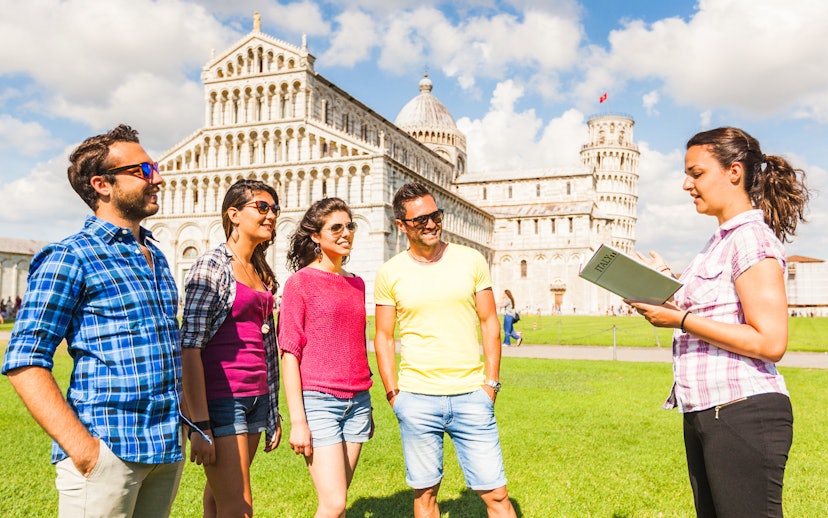
Yes, group visits are common here, and that is part of why the square gets busy late in the morning. If you are traveling with a group, a guided option works well because it keeps everyone on the same schedule and explains the Cathedral before the Tower climb. Small groups generally move through the site more easily than large ones.
Yes, it works well for families, especially if your children are old enough to climb the Tower. The open lawn, short walking distances between monuments, and dramatic exterior make it easier than a long museum visit. The main restriction is the Tower rule: children under 8 years cannot climb, and ages 8–18 must be with an adult.
The Cathedral interior is wheelchair accessible via ramps, but the Tower is not. The climb involves 273 steep steps and no elevator, so it is unsuitable for wheelchair users and for visitors with cardiovascular concerns. The square itself is comparatively easy to navigate because the main monuments sit close together on flat ground.
Yes, food is available near the Cathedral, but the best strategy is to eat before or after your monument visit rather than during it. The square has quick convenience options, while better meal stops are a short walk away toward Via Santa Maria, Borgo Stretto, and the riverside. That matters more if you have a fixed Tower time.
Yes, you should cover your shoulders and knees for the Cathedral and Baptistery. This is not optional, because both are religious spaces and entry can be refused if you arrive underdressed. In summer, the easiest fix is to carry a light scarf, overshirt, or layer rather than trying to improvise at the entrance.
Yes, but visitor access can be affected when religious events are taking place. That usually matters more for guided visits, because some tours may need to adjust if the Cathedral cannot be visited alongside the guide at that moment. If your main goal is quiet sightseeing, non-service hours are the easier choice.