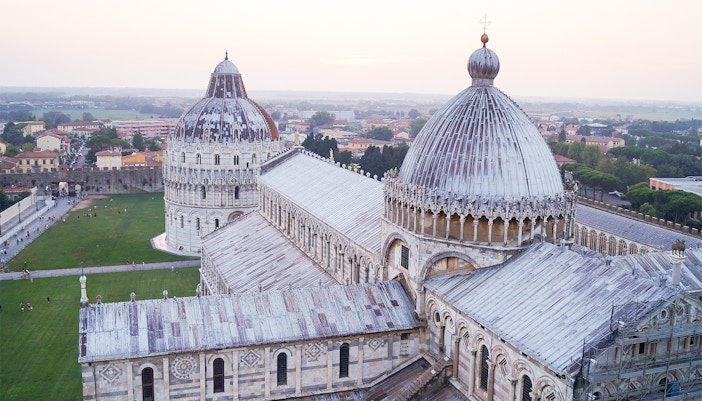
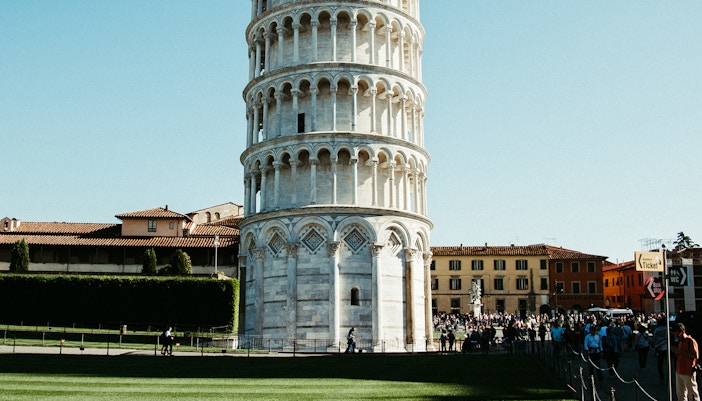
The beautifully carved marble base features Romanesque details and intricate reliefs that showcase medieval craftsmanship. You’ll also spot subtle structural reinforcements that were added during restoration to stabilize the lean.
Quick Information
RECOMMENDED DURATION
1 hour
TICKETS
From $28.08
EXPECTED WAIT TIME - STANDARD
30-60 mins (Peak), 0-30 mins (Off Peak)
EXPECTED WAIT TIME - SKIP THE LINE
0-30 mins (Peak), 0-30 mins (Off Peak)
Did you know?
The tower’s famous tilt began during construction due to soft, uneven ground beneath its foundation.
Galileo is believed to have conducted physics experiments from the tower.
The Leaning Tower has survived four strong earthquakes over the centuries.
Why is the Leaning Tower of Pisa a must-visit attraction?
The Leaning Tower of Pisa isn’t just a global icon—it’s an architectural accident that turned into a masterpiece. Its unique tilt, caused by unstable soil, has fascinated millions for centuries. As you stand at its base, you'll not only witness the illusion of defiance against gravity but also appreciate the intricate Romanesque detailing in its white marble exterior.
Climb the 273 spiral steps to the top for panoramic views of Pisa and the surrounding Tuscan countryside. The tower’s presence in the Piazza del Duomo, alongside the Cathedral and Baptistry, offers visitors a glimpse into medieval Italian craftsmanship and culture. Whether you're a history buff, a photography enthusiast, or a curious traveler, the Leaning Tower offers a blend of curiosity, beauty, and history that makes it a must-see on any Italy itinerary.
Must-explore spots in the tower

Tower base

Spiral staircase
Climb the 273 steps of the narrow spiral staircase that winds upward, giving you a firsthand feel of the tower’s distinctive tilt and architectural ingenuity. The climb offers shifting perspectives as you ascend, making the lean feel more dramatic with every turn.

Bell chamber
At the very top, the bell chamber houses seven ancient bronze bells, each with its own unique tone, ringing out over Pisa for centuries. Though rarely rung today, these bells once played a central role in Pisa’s religious and civic life.

Panoramic views
From the summit, enjoy stunning views of Pisa’s red-tiled rooftops, the cathedral complex, and the rolling Tuscan hills beyond—an unforgettable perspective that rewards every step climbed. It’s the perfect spot for photos, offering a breathtaking 360-degree view of the Piazza dei Miracoli and beyond.
Highlights of the tower
1/5
Optical illusion
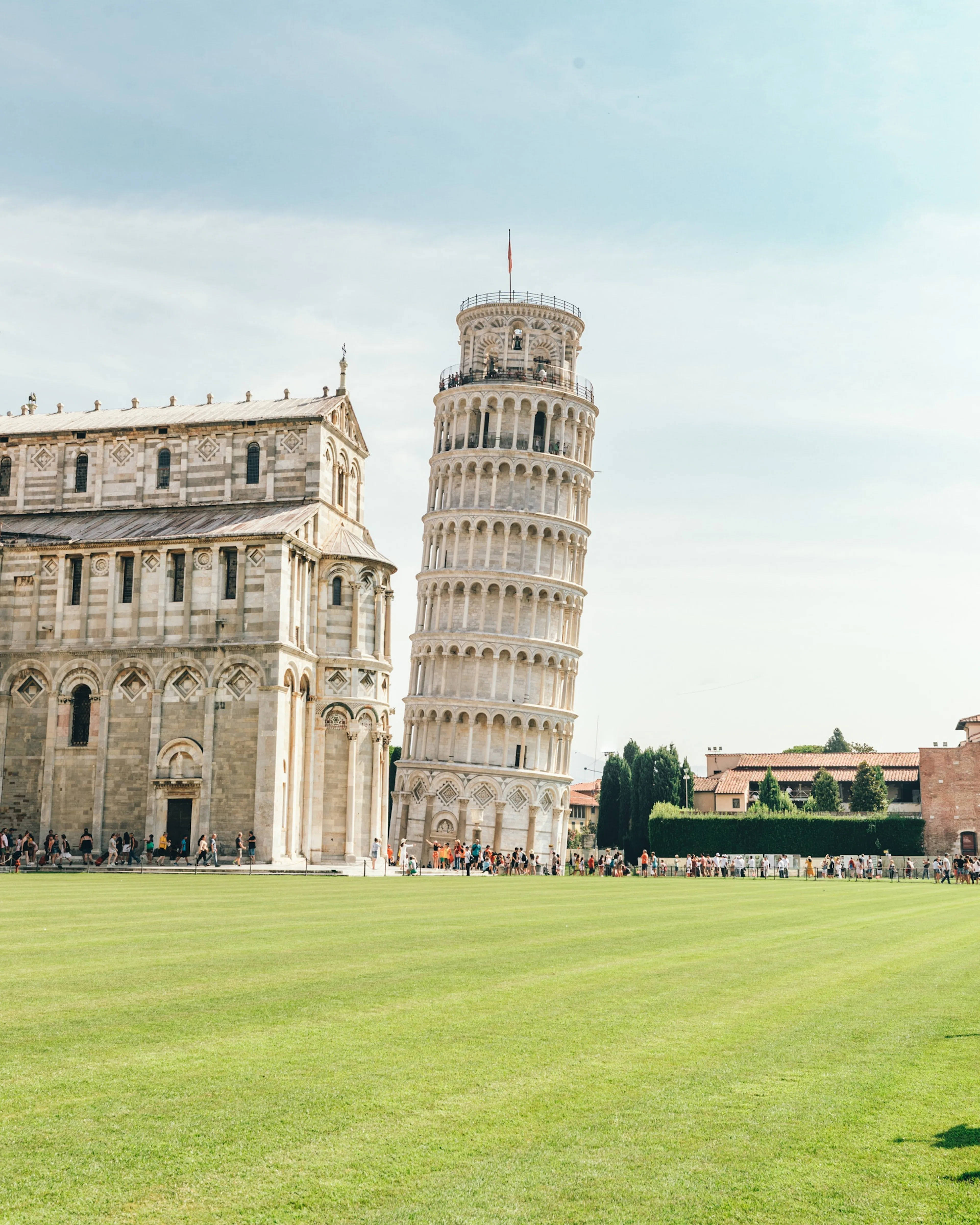
The tower’s lean creates fascinating optical illusions visible from various angles in the Piazza del Duomo.
Windows and openings
There is no artificial lighting inside the tower. The light that comes into the tower is from the windows and openings from the upper stories of the building.
Hidden columns
Ornate, twisted columns decorate the upper loggias, showcasing exquisite medieval stone craftsmanship.
The seven bells
Each bell represents a musical note and has its own unique history dating back centuries.
Glass ceiling
A pentagon-shaped glass covering on the top of the tower allows you to look into the tower from the storey where the bells are located.
A brief history of the Leaning Tower of Pisa
- 1173 - The construction of the bell tower begins.
- 1178 - Construction is paused because the tower starts to tilt due to its massive weight and the loose soil beneath.
- 1272 - Giovanni de Simone resumes the construction of the bell tower.
- 1284 - Construction is once again halted because Pisa's defeat in the Battle of Meloria.
- 1399 - The construction is finally complete, but the tilt still exists.
- 1934 - Mussolini attempts modifications to make the tower straight but worsens it further.
- 1990 - The tower is closed for corrections.
- 2001 - The Leaning Tower of Pisa reopens for visits.
Who built the tower?
Initially, the tower was designed by Bonanno Pisano, a renowned local sculptor and architect. Construction spanned over two centuries, with architects Giovanni di Simone and Tommaso Pisano later overseeing the project. They made structural adjustments to counteract the tilt. The tower exemplifies the elegant Pisan Romanesque style, blending artistic detail with medieval engineering ingenuity.
Architecture of the tower
Made primarily of white and grey marble, the Bell Tower features six open loggias stacked above a solid base and capped with a bell chamber. The 56m tall tower leans at nearly 4 degrees due to its weak foundation soil. Construction took place in three main stages from 1173 to 1372. The interior spiral staircase connects all levels, and the tilt is especially perceptible during the ascent. Decorative blind arcades, columned galleries, and classical ornamentation showcase the artistic legacy of medieval Pisa.
Additional information on the tower
The Leaning Tower of Pisa stands proudly within the Piazza del Duomo, also known as Piazza dei Miracoli, a UNESCO World Heritage Site. This beautiful square is home to four remarkable monuments: the Leaning Tower, the Pisa Cathedral, the Baptistry, and the Camposanto Monumentale. Visitors can easily explore all these historic sites together in one visit by booking Pisa Monumental Complex tickets, making the piazza a complete and unforgettable cultural experience.
Frequently asked questions about the Leaning Tower of Pisa
No, the Leaning Tower of Pisa is not officially listed among the Seven Wonders of the Ancient or Modern World, but it remains one of the world’s most famous architectural landmarks.
Yes, after extensive restoration and monitoring, the tower is currently stable and safe for visitors, with its lean reduced to about 3.97 degrees.
The Leaning Tower of Pisa currently leans at an angle of about 3.97 degrees. At its most extreme in the 1990s, it tilted over 5.5 degrees, but restoration efforts have since reduced the lean to a safer angle without straightening the tower completely, preserving its iconic tilt.
Yes, visitors can climb inside the tower via a spiral staircase to reach the top and enjoy panoramic views of Pisa.
The tower has eight levels, including six open galleries, the base, and the bell chamber at the top.
Despite enduring at least four major earthquakes since 1280, the Pisa Tower still stands—thanks to the very soil that caused its tilt. Engineers found that its soft foundation and rigid structure create a unique balance, allowing it to sway with seismic waves without collapsing.
Contrary to its exterior magnificence, the tower has spare interiors, with just a couple of narrow staircases leading to the top. The inside is reminiscent of a giant cylinder, into which natural sunlight pools in from the various windows and the aperture on top.
In one scene of the move Superman 3, Superman is shown to straighten the Leaning Tower's tilt.
.jpg?auto=compress%2Cformat&w=702.4499999999999&h=401.4&q=90&ar=7%3A4&crop=faces&fit=crop)